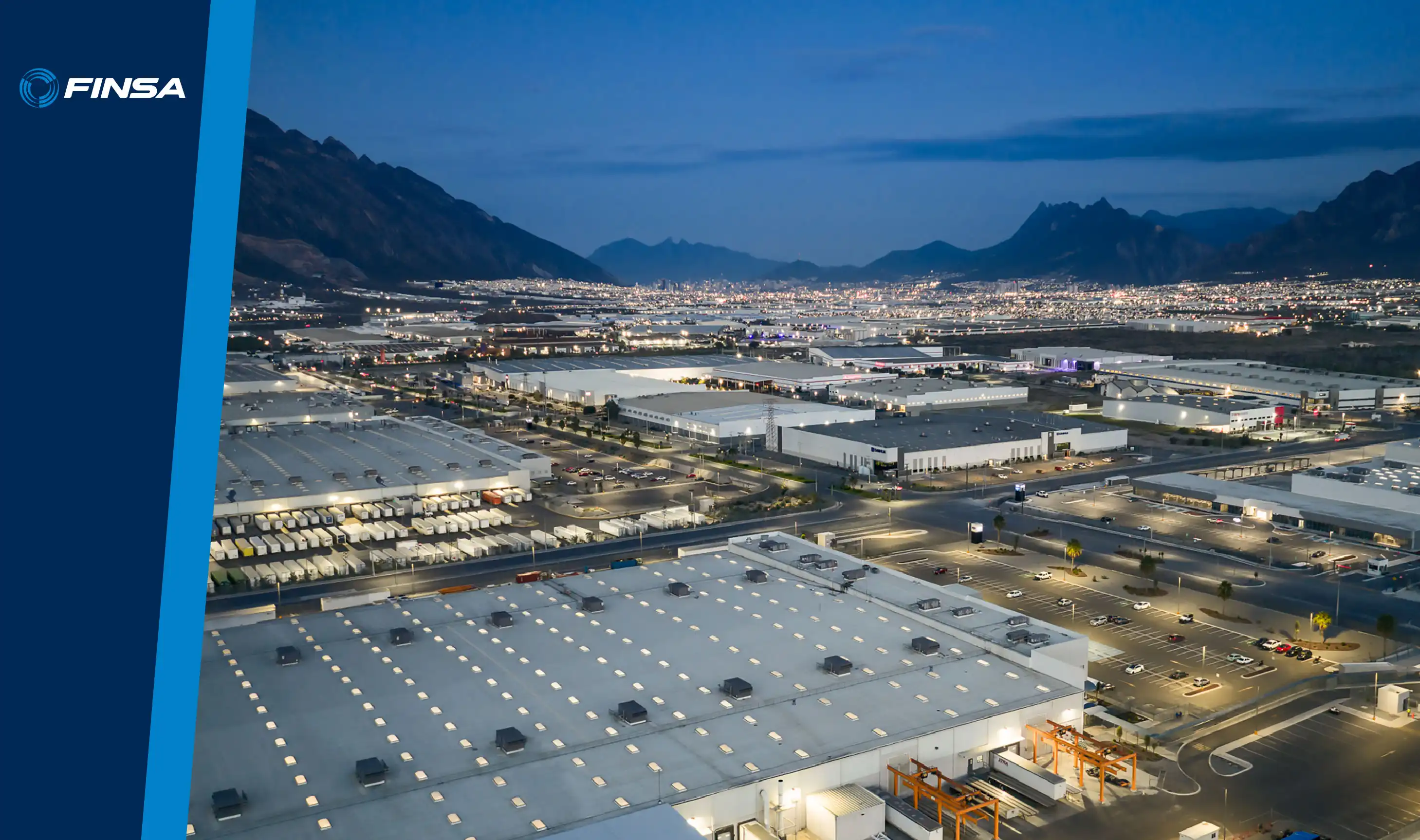
Nuevo León: the starting point for understanding industrial development in Mexico
14 de Junio de 2024
The relocation of production chains, the growing integration with North America, and the global demand for modern infrastructure have raised the competitive standards of each region, and Mexico is at a key moment in shaping its industrial landscape.
In this context, the FINSA Industrial Development Index (IDI), compiled annually since 2023, is presented as a strategic tool to understand where Mexico's industrial capabilities stand today. Which states are making strong progress and which face structural challenges that require immediate attention
To open this conversation, the best starting point is currently Nuevo León, the state that leads the national IDI ranking for the third consecutive year.
Nuevo León: once again the leader
In the third edition of the Industrial Development Index, Nuevo León is once again positioned as the most robust industrial ecosystem in the country, a result that not only confirms its historical trajectory but also reflects its ability to adapt and scale in a highly competitive global environment.
Its leadership rests on five pillars:
1. Unprecedented Industrial Infrastructure
Nuevo León has the largest industrial space in the country, reaching 17.9 million sq.ft., in addition to a unique construction rate, with 1.3 million sq.ft. of new supply on average during the last five years.
This is complemented by a logistics ecosystem articulated by world-class industrial parks, efficient road connectivity, and a strategic position within the North American manufacturing corridor.
2. Economic strength and high productive complexity
The state contributes 12.6% of the national manufacturing GDP, consolidating itself as the largest industrial economy in Mexico.
It also stands out in:
- High flow of foreign direct investment.
- Competitive sectoral diversification.
- The highest level of economic complexity in the country, according to DataMéxico.
This makes it a territory where advanced manufacturing, productive innovation, and high value-added supply chains coexist.
3. Competitive Labor Ecosystem
With an average income of $92.6 MXN per hour and an education level above the national average, Nuevo León maintains a solid and specialized labor base.
This social performance supports the operation of industries that require highly skilled technical and professional profiles demand.
4. Innovation that drives growth
The state boasts outstanding inventive activity, ranking among the top in the country in invention applications per capita.
Its research centers, STEM academic offerings, and technical programs create a continuous cycle of talent and innovation that strengthens its competitiveness.
5. Emerging Challenges: Sustainability and Air Quality
Despite its leadership, Nuevo León faces different areas of opportunity due to:
- High levels of days with poor air quality.
- High energy consumption.
- Need to strengthen mitigation strategies environmental.
These indicators highlight the importance of balanced and more sustainable long-term industrial growth.
Nuevo León: key in the FINSA 2025 Industrial Development Index
Starting the analysis of the Industrial Development Index with Nuevo León León allows us to understand what it truly means to compete in a globalized environment, through industry with scale and available technical talent, as well such as the capacity to attract and retain strategic investments and infrastructure ready for immediate expansion.
Its performance serves as a benchmark for understanding Mexico's industrial potential.
However, although three large regions of the country—the northern border, the Bajío, and the central region—concentrate industrial maturity, there are also opportunities for other entities to integrate into national productive development.
FINSA and its vision for the country's industrial development
As a company committed to evolution, FINSA recognizes that Mexico's growth depends on promoting complete industrial ecosystems, where infrastructure, talent, innovation, and sustainability advance together.
The third edition of the Industrial Development Index offers an accurate view of the present, but also a clear guide on the decisions that need to be made in the coming years: invest where consolidated capacities already exist, support transitioning states, and strengthen regions with emerging potential.
How is the IDI constructed?
The Industrial Development Index is a robust methodology based on the following five strategic dimensions and 30 variables from public sources:
1. Infrastructure
This dimension focuses on the space available for industrial growth, evolution, connectivity, and basic infrastructure.
2. Economic Environment
Measures state GDP, foreign direct investment, exports, diversity, productive complexity, and economically active population.
3. Social Environment and Security
Income level, access to education, inclusion, perception of security, justice, and the rule of law are explored in this dimension.
4. Environment and Sustainability
Here, state initiatives that promote environmental stewardship and climate change mitigation are the measure for state ranking.
5. Talent Development and Innovation
For its part, the number and profile of graduates, innovation through researchers, research centers and inventions are not far behind.
Nuevo León leads the way. The IDI sets the course
The leadership of Nuevo León is more than a result; It is a sign of the path Mexico can take if it invests with a long-term vision in competitiveness, infrastructure, and talent.
With this introduction, we begin our tour of the 32 states evaluated in the third edition of the Industrial Development Index.
Each state tells a different story. Each indicator reveals an opportunity to move forward. And together, they outline the industrial map that Mexico needs for the next decade.
Click here to download the FINSA Industrial Development Index








Subscribe to our newsletter

We are FINSA
Subscribe to our newsletter
Don't miss out on news, new developments and updates.
Subscribe to our newsletter
Don't miss out on news, new developments and updates.
We are FINSA