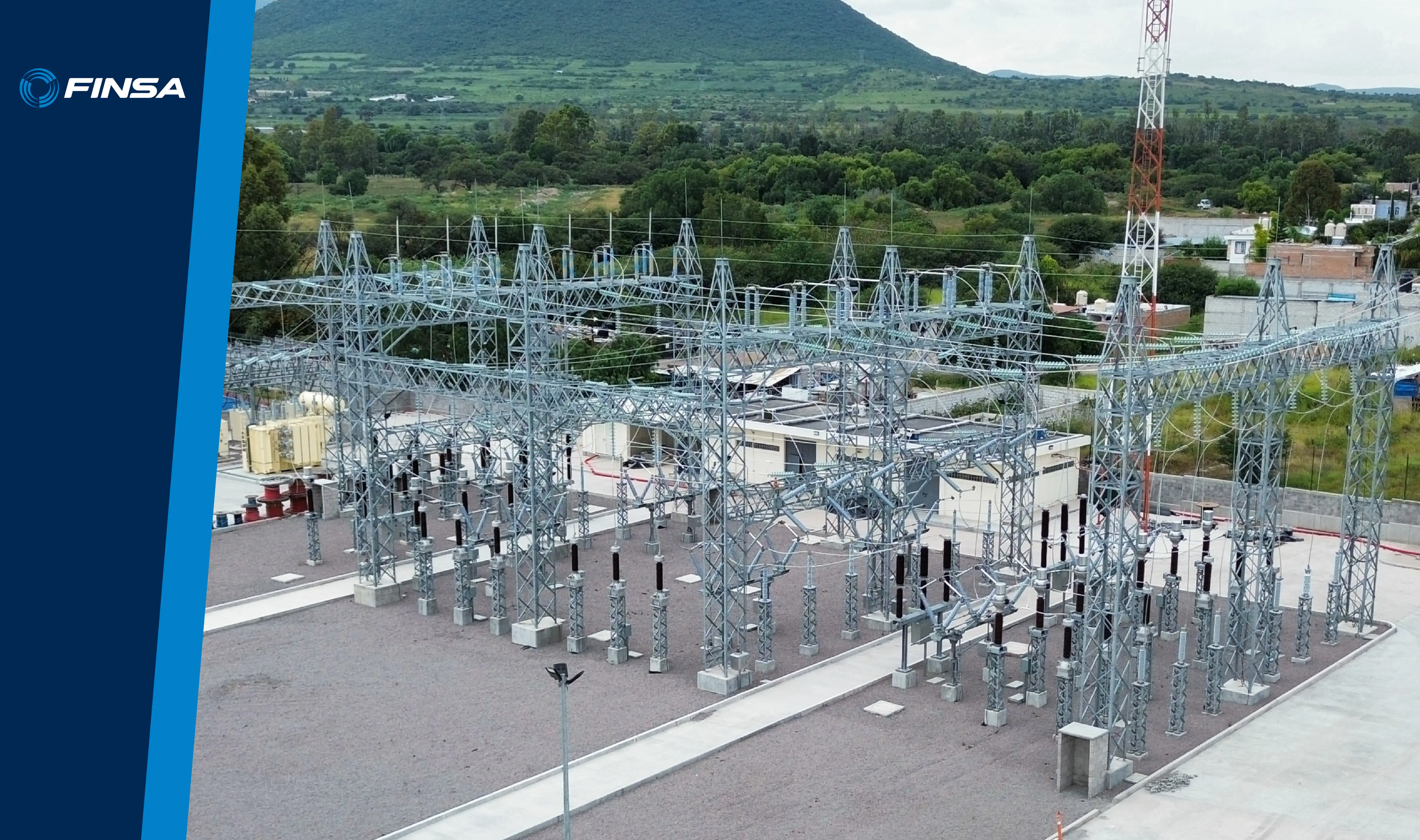
New electrical substation at FINSA Querétaro III: infrastructure for industrial growth
14 de Junio de 2024
Industrial growth isn't always heralded by new buildings or investment figures. Sometimes, the clearest signs appear in the energy infrastructure that makes reliable operation possible.
More than just an isolated structure, electrical substations represent a structural response to an existing demand that requires reliable, stable, and scalable supply conditions for industry.
And that is the case with the installation in the FINSA Querétaro industrial park, which seeks to sustain industrial dynamism towards 2026.
Energy infrastructure as the primary indicator of growth
When the grid needs reinforcement, it is because projected consumption already exceeds existing operating margins. Electrical substations fulfill precisely that role: allowing new loads to be integrated without compromising stability, quality, or continuity. They are not a complement, but a critical point where it is defined whether an industrial environment can continue to grow in an orderly manner.
In this context, the FINSA Querétaro substation indicates that demand is neither marginal nor temporary.
It caters to a user profile that requires firm capacity, continuous operation, and electrical conditions compatible with high-performance industrial processes.
What type of operation does this level of infrastructure require?
Not every growth justifies a substation.
This type of infrastructure is usually associated with:
-
Manufacturing processes that operate continuously and depend on a stable load base.
-
Logistics platforms with variable consumption and significant peaks.
-
Production projects that need available power from the start, without transition phases.
This suggests that projects arriving in or consolidating in the region have a higher degree of of energy sophistication. Electricity ceases to be just a service and becomes a critical factor of competitiveness.
FINSA Querétaro III Industrial Park:
Querétaro has consolidated itself as one of the most dynamic industrial hubs in the country. This dynamism is not only perceived in industrial inventories or investment, but also in the way the electrical system is beginning to operate.
Each reinforcement to the grid is a sign that growth is becoming structural.
The commissioning of a substation confirms that the system can no longer absorb significant new users without specific planning. The silent risk: growing without sufficient network capacity. The main risk is not that industrial demand will increase, but that it will do so without a synchronized expansion of the infrastructure. When the network falls short, the effects are not always immediate, but they are. Cumulative:
-
Greater exposure to operational constraints.
-
Less flexibility for maneuvers and maintenance.
-
Vulnerability to failures in critical nodes.
-
Loss of reliability in areas strategic.
The substation in the FINSA Querétaro III industrial park functions as a proactive decision in response to this scenario. It is not a response to a crisis, but rather a preventative assessment of the system.
Energy as the cornerstone of industrial planning towards 2026
“The future of industry depends on having reliable, competitive, and clean energy. “With this program, our clients gain access to world-class solutions that generate savings and energy resilience from day one,” highlighted Sergio Argüelles, president and CEO of FINSA.








Subscribe to our newsletter

We are FINSA
Subscribe to our newsletter
Don't miss out on news, new developments and updates.
Subscribe to our newsletter
Don't miss out on news, new developments and updates.
We are FINSA