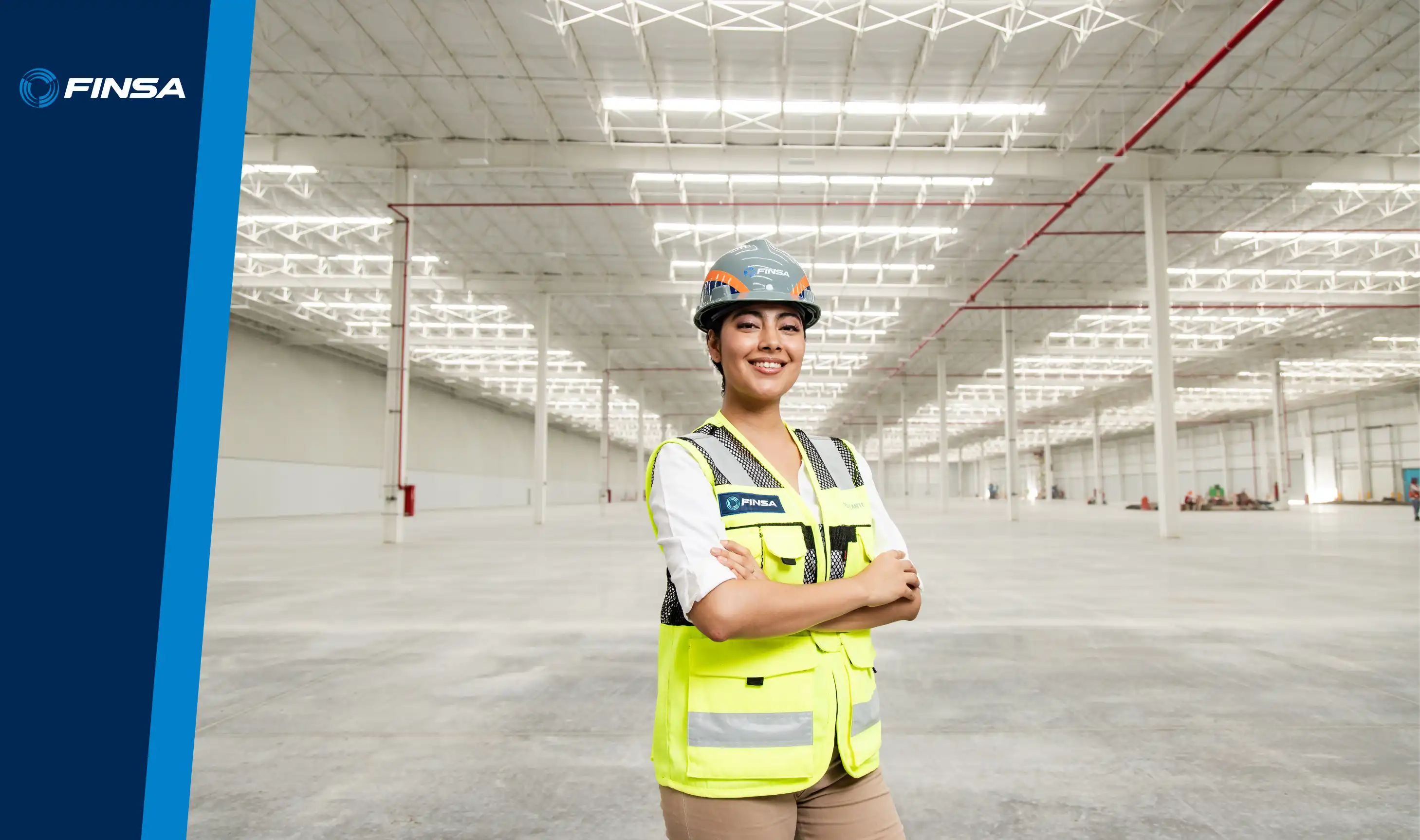
Women in industry: strengthening female talent for a more competitive manufacturing sector
14 de Junio de 2024
Women's participation in industry is a determining factor for the sustainable growth of the manufacturing sector. Beyond From an equity perspective, integrating and developing female talent has become a strategic decision that directly impacts innovation, productivity, and business resilience.
This March 8th, reflecting on the role of women in industry involves recognizing progress, identifying challenges, and consolidating strategies that allow us to empower female talent as a real competitive advantage.
What is the current landscape for women in industry?
According to INEGI, the manufacturing industry contributes approximately 20% of the national GDP and generates more than 15% of formal employment in Mexico. However, the presence of women in leadership and decision-making positions remains low compared to their participation in the total workforce. Empowering women in industry is not just a matter of representation. It is a strategic decision that directly impacts the capacity for innovation, adaptation, and sustainability of the productive sector. In an environment marked by technological transformation and the relocation of supply chains, fully leveraging female talent becomes indispensable.
Women's Participation in the Economy: An Indicator of Industrial Potential
The FINSA Industrial Development Index 2025 identifies women's participation in economic activity as a relevant component of the productive environment.
According to this data:
-
The Mexico City registers 47% female participation, the highest level in the country.
-
It is followed by Colima, Querétaro, Hidalgo, and Morelos, states with ecosystems that show greater integration of women into the economic dynamic.
These results suggest that territories with greater female labor inclusion tend to consolidate broader labor markets with a greater availability of diverse profiles. The more women participate in the economy, the more the productive system expands its talent base and strengthens its structural conditions to sustain growth. industrial.
Female talent as a competitive advantage
Various analyses of the manufacturing sector show that diversity in work teams contributes to:
-
Expanding the available skill base.
-
Improving the quality of decision-making.
-
Increasing responsiveness to changing scenarios.
-
Consolidating more collaborative organizational environments.
Female talent brings complementary perspectives that enrich operational processes, strategic management, and the implementation of transformation initiatives.
Inclusion and industrial competitiveness: a direct relationship
Despite these barriers, the KPMG study also reveals significant progress among women leading strategic areas in manufacturing:
-
50% strengthened their digital skills.
-
33% expanded their professional networks.
-
33% improved their management in crisis contexts.
Female talent and its impact
In terms of organizational impact:
-
56% consolidated high-performance teams.
-
47% linked directly impacting their actions with financial results.
-
41% developed; Strategic networks and relationships within the sector.
These practices have fostered leadership models focused on results, collaboration, and operational efficiency.
Emerging Areas
Furthermore, greater female participation is observed in emerging areas:
-
22% participate in sustainability and corporate governance initiatives.
-
12% is involved in artificial intelligence and automation projects.
This opens up concrete opportunities for their integration into digital transformation processes within plants and production chains.
Strengthening the presence of women in manufacturing
To strengthen the presence of women in the industry, organizations can advance in:
-
Work schemes that consider different stages of professional life.
-
Mentoring programs and executive sponsorship.
-
Continuous technical training in strategic areas.
-
Transparent evaluation and promotion mechanisms.
-
Corporate culture focused on equity and performance recognition.
When these actions are part of the business strategy, inclusion ceases to be just talk and becomes in a measurable practice.
Conclusion: Women in Industry, a Long-Term Strategic Commitment
The conversation about women in industry is not limited to a social approach. Data shows that female talent contributes to strengthening digital capabilities, crisis leadership, financial performance, and organizational cohesion.
Fully integrating women at all levels of manufacturing expands the available human capital, improves the resilience of the production ecosystem, and enhances industrial competitiveness.
On International Women's Day, recognizing these advances and challenges implies acknowledging that inclusion is not an add-on, but a structural component of sustainable industrial development.








Subscribe to our newsletter

We are FINSA
Subscribe to our newsletter
Don't miss out on news, new developments and updates.
Subscribe to our newsletter
Don't miss out on news, new developments and updates.
We are FINSA